
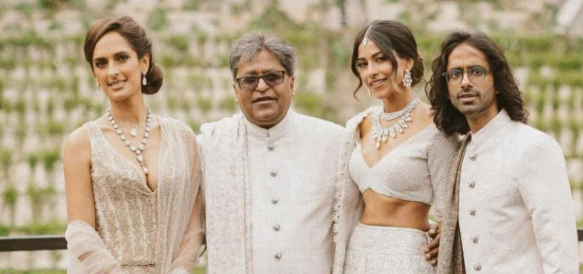
Behind every great disruptor is a family story that made disruption possible. In the case of Lalit Kumar Modi — the visionary, controversial, and inescapably brilliant man who invented the Indian Premier League (IPL) and changed the face of cricket forever — that story begins not in a cricket stadium, but in a dusty village near Delhi in 1933, where a determined Marwari businessman set up a sugar mill on 100 bighas of land and named the town after himself.
The Modi family is one of India's great business dynasties — a family that built an industrial city from scratch, lost much of it to internal division, and then watched one of its youngest members transform not an industry but an entire sport. This is the story of that family, across four extraordinary generations.
The Patriarch: Rai Bahadur Gujarmal Modi — The Man Who Built a City
To understand Lalit Modi, you must begin with his grandfather, Rai Bahadur Gujarmal Modi (9 August 1902 – 22 January 1976) — one of independent India's most remarkable industrialists and the true founder of the Modi dynasty.
Born as Ram Prasad Modi in Mahendragarh (now in Haryana) to a Marwari family of small businessmen, Gujarmal showed entrepreneurial instinct from a young age. After facing exile from the Patiala state in the 1930s due to conflicts with local authorities, he searched for a new beginning. Wikipedia — Gujarmal Modi
In 1933, with just Rs. 400 in hand, he travelled to a sleepy village called Begumabad, about 50 kilometres from Delhi, and set up a sugar mill on 100 bighas of land with machinery imported from England. That sugar mill was the seed of everything that followed.
Starting in 1934 with one sugar mill and a few hundred residents, in mere four decades, the Modi Group became the 7th largest business group in India, with assets of over Rs. 900 crore and annual sales revenue of Rs. 1,600 crore. The Print
As the town grew — adding vanaspati ghee, soaps, textiles, steel, rubber, nylon, paint, cement, and dozens more industries — the village of Begumabad was formally renamed Modinagar in 1945. A village had become a city named after one man. Wikipedia — Gujarmal Modi
During World War II, Gujarmal's factories supplied materials to the Allied war effort. In 1945, the British government wished to confer a knighthood upon him. In a remarkable gesture, Gujarmal declined, instead requesting an Indian title — reflecting a man who was proud of his roots and unwilling to adopt the markers of colonial favour. He was later awarded the Padma Bhushan by the Government of India in 1968. Wikipedia — Gujarmal Modi
His personal life carried extraordinary tragedy. Married at twelve to Rajban Devi, the couple had ten children over a decade — not one survived. Every child died at birth or in infancy. In 1932, at the urging of family elders, Gujarmal took a second wife, Dayawati Devi — and from that marriage came five sons and six daughters, all of whom grew up in Modinagar watching their father build an industrial empire from the ground up. Wikipedia — Krishan Kumar Modi
Gujarmal Modi passed away on 22 January 1976. He left behind a city, a conglomerate, and a family whose story was only just beginning.
Generation Two: Krishan Kumar Modi (KK Modi) — The Patriarch Who Expanded the Empire
After Gujarmal's passing, leadership of the Modi Group passed to his eldest son by Dayawati Devi — Krishan Kumar Modi (27 August 1940 – 2 November 2019), known universally as KK Modi — Lalit Modi's father.
KK Modi was born in Patiala in August 1940, the first long-awaited son after years of tragedy. His birth was greeted with "unprecedented joy" in the Modi household — a son had finally arrived after decades of heartbreak. Wikipedia — Krishan Kumar Modi
KK proved worthy of that joy. At just 19, he accompanied his uncle to European countries to explore textile machinery, and by his mid-twenties was managing production at Modipon, the family's nylon yarn manufacturing unit. After Gujarmal's death in 1976, KK took over as patriarch and provided leadership through a critical decade — holding the sprawling Modi Group together through the challenges of the Emergency era and the shifting Indian economy.
In 1989, the inevitable happened: the Modi Group split, dividing businesses between Gujarmal's five sons — KK, VK Modi, SK Modi, BK Modi, and UK Modi. KK took control of Godfrey Phillips India — the tobacco and consumer goods company — and Modi Enterprises, expanding them significantly. By 2012, Forbes listed him as India's 89th richest man. Wikipedia — Krishan Kumar Modi
KK Modi married Bina Modi on 4 December 1961 in a traditional arranged marriage. Bina Modi became a formidable businesswoman in her own right, later leading Godfrey Phillips India after KK's passing and becoming one of India's most prominent women in business.
KK Modi passed away on 2 November 2019. His three children — a daughter and two sons — each took their own path through the family legacy.
His Mother: Bina Modi — The Matriarch Who Leads
Bina Modi, Lalit's mother, is far more than a biographical footnote. After KK Modi's passing in 2019, she became the Chairperson and Managing Director of Godfrey Phillips India — one of India's leading companies — stepping into leadership with authority and business acumen that earned wide respect.
Bina Modi has continued to play a central role in the Modi family's business empire, overseeing one of India's major consumer goods conglomerates and navigating the complex dynamics of a large family business in the modern era. She is recognised as one of India's most influential businesswomen. StarsUnfolded
Lalit Modi's Siblings
KK Modi and Bina Modi have three children.
Charu Modi Bhartia is the eldest child and Lalit's older sister. She has pursued a career in education, handling the Modi group's educational ventures including the launch of Modi Apollo International Institute in Delhi — bringing the Western International University campus to India in partnership with Apollo Education. She is described as the eldest granddaughter of Gujarmal Modi who "led the path" for the family's next generation. ShubhrangshuRoy.com
Samir Modi is Lalit's younger brother. He has been associated with Godfrey Phillips India and the family's business ventures. In recent years, Samir has been involved in a well-publicised inheritance dispute within the Modi family — a reminder that even the most storied business dynasties face the same internal tensions as any family. StarsUnfolded
Lalit Kumar Modi — The Disruptor
Lalit Kumar Modi was born on 29 November 1963 in New Delhi — the elder son of KK and Bina Modi, and the grandson of the man who built Modinagar. Wikipedia
His upbringing was a study in privilege and disruption in equal measure. In 1971, he was enrolled at Bishop Cotton School in Shimla. A kidnapping threat against the family prompted his transfer to St Joseph's College, Nainital — but in 1980, he was expelled for truancy, having left school to watch a movie. A detail that, in retrospect, feels like the first act of a man who would never quite colour inside the lines. Wikipedia
Between 1983 and 1986, he studied in the United States — first at Pace University in New York for two years, then at Duke University in North Carolina for one year. His American years were formative in multiple ways — giving him exposure to the commercial structure of American sports leagues that would later inspire the IPL. They also brought significant personal turbulence, including a 1985 criminal conviction in the United States. He returned to India in 1986 and rejoined the family business. Wikipedia
His Wife: Minal Modi — The Woman Behind the Visionary
One of the most moving chapters of the Lalit Modi family story is that of his wife, Minal Modi.
Lalit met Minal during his time in the United States. They married on 17 October 1991 in Mumbai. Minal was nine years older than Lalit — a detail that reflected the unconventional nature of their relationship and, by all accounts, the depth of his feeling for her. WikiGraphy
Minal had a daughter, Karima Sagrani, from a previous marriage to Jack Sagrani — a Nigeria-based Sindhi businessman. Lalit embraced Karima as his own, and she became a full member of the Prevost family. WikiGraphy
Together, Lalit and Minal had two children: a son, Ruchir Modi, and a daughter, Aliya Modi. Minal was deeply involved in several of Lalit's business ventures — she served as a director in his real estate company, and was a central presence in his life through his years of greatest triumph and deepest controversy. WikiGraphy
Minal Modi passed away from cancer in 2018 — a loss that profoundly affected Lalit. She did not live to see many of the later chapters of his life, including his very public relationship with actress Sushmita Sen (announced in 2022 and later separated in 2025). Her passing marked the end of the central partnership of his personal life.
His Children: The Next Generation
Ruchir Modi is Lalit and Minal's son. He has been involved in the family's business activities and has maintained a relatively lower profile compared to his father's very public life.
Aliya Modi is Lalit and Minal's daughter. Like her brother, she has largely stayed away from the public eye.
Karima Sagrani — Minal's daughter from her first marriage, embraced by Lalit as his own — has also been part of the extended Modi family story. Her husband, Gaurav Burman, was a partner in Global Cricket Venture, while Gaurav's brother Mohit Burman was a partner in the Kings XI Punjab IPL franchise — a family connection that later became part of the BCCI's controversy surrounding Lalit's tenure as IPL Commissioner. StarsUnfolded
The Modi Family Tree at a Glance
The Founding Generation
- Rai Bahadur Gujarmal Modi (9 August 1902 – 22 January 1976) — founder, Modi Group; built Modinagar from scratch; Padma Bhushan 1968
- First wife: Rajban Devi — ten children, none survived
- Second wife: Dayawati Devi — five sons and six daughters
KK Modi's Generation (Gujarmal's sons)
- Krishan Kumar (KK) Modi — eldest son; expanded Modi Enterprises & Godfrey Phillips
- Vinay Kumar (VK) Modi
- Satish Kumar (SK) Modi
- Bhupendra Kumar (BK) Modi
- Umesh Kumar (UK) Modi
Lalit Modi's Parents
- Father: Krishan Kumar (KK) Modi (27 August 1940 – 2 November 2019) — businessman; president, Modi Enterprises; Forbes India rich list
- Mother: Bina Modi — Chairperson & MD, Godfrey Phillips India; prominent Indian businesswoman
KK & Bina Modi's Children
- Daughter: Charu Modi Bhartia — educationist; launched Modi Apollo International Institute
- Son: Lalit Kumar Modi (born 29 November 1963) — founder, IPL
- Son: Samir Modi — businessman; associated with Godfrey Phillips India
Lalit Modi's Family
- Wife: Minal Modi (née Aswani; 1954 – 2018) — businesswoman; died of cancer; married Lalit 17 October 1991
- Step-daughter: Karima Sagrani (Minal's daughter from previous marriage to Jack Sagrani)
- Son: Ruchir Modi
- Daughter: Aliya Modi
The Man Who Created the IPL
Lalit Modi's most enduring contribution to India — and to the world — is the Indian Premier League, launched in 2008. The idea was not new: Lalit had proposed a franchise-based T20 cricket league to the BCCI as far back as 1995, but was rejected. Over a decade later, having accumulated the political capital and the relationships needed, he finally made it happen.
The IPL's first season in 2008 was an immediate sensation — combining cricket, Bollywood, cheerleaders, franchise ownership by film stars and industrialists, and television deals that transformed the economics of Indian cricket overnight. Lalit had borrowed from the structure of American sports leagues he had studied during his time in the US, and applied it to a country of over a billion cricket-mad fans. StarsUnfolded
He served as Chairman and Commissioner of the IPL from its launch until 2010, when the BCCI suspended him on 22 charges including financial irregularities, bid rigging, and contract manipulation. He has lived abroad — primarily in London — since then, fighting legal battles from a distance and watching the league he created grow into one of the most valuable sports properties in the world.
Whether one views him as visionary, controversialist, or both, one fact is undeniable: the IPL would not exist without Lalit Modi. And without the Modi family's century-long journey from a sugar mill in Begumabad to the corridors of global sport, neither would he.
What the Modi Family Story Teaches Us
The Lalit Modi family story is, at its heart, the story of four generations of a Marwari business family that never stopped taking risks. Gujarmal built a city from Rs. 400. KK expanded an empire through disciplined management. And Lalit — the boy who was expelled from school for watching a movie — took the family tradition of disruption and applied it to sport, creating something that changed India permanently.
Every generation of the Modi family has left its mark on its era. Every generation has also faced its share of tragedy, controversy, and reinvention. That is, in the end, what makes their story so recognisably human — and so worth preserving.
Inspired by the remarkable multi-generational story of the Modi family? Your family's history is just as worth documenting and preserving. Start building your own family tree with Family Root App today.
👉 Start building your family legacy today with Family Root App
- Android: Family Root App on Google Play
- iOS: Family Root App on Apple Store
📜 Disclaimer The family tree and biographical information provided in this article are based on publicly available sources and records. While we strive for accuracy, we do not guarantee the completeness or authenticity of all data. This content is intended for educational and informational purposes only and does not aim to infringe on any individual's privacy or personal rights. If you believe any information is incorrect or wish to request edits or removal, please contact us at Info@familyrootapp.com.