
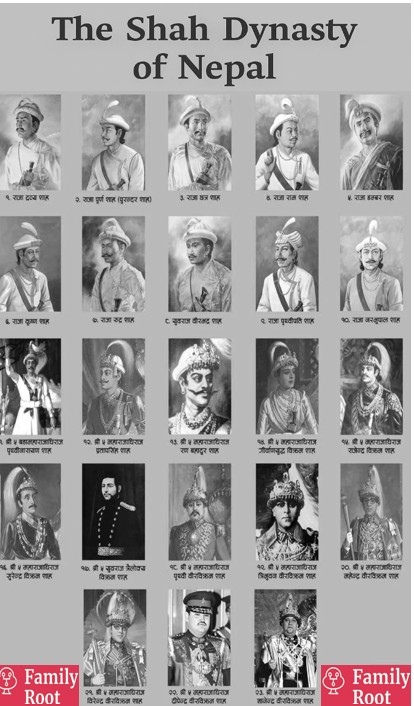
This family tree chronicles Nepal’s Shah monarchs, from the unification under Prithvi Narayan Shah through to the final king Gyanendra—offering a deep dive into royal succession and historical context.
Origins & Early Kings of Gorkha
The Shah dynasty traces back to Kulamandan Shah Khad, who ruled Lamjung and Kaski and established the dynasty’s roots. His lineage included:
-
Yasho Brahma Shah – Kulamandan’s son, also a ruler in the region.
-
Drabya Shah – His youngest son, who conquered Gorkha in 1559 and is considered the true founder of the royal line in Gorkha.
Kings of Unified Nepal (1768–2008)
From unification to the republic’s dawn, here are the major monarchs:
-
Prithvi Narayan Shah (1768–1775) – The founder of modern Nepal; unified the Kathmandu Valley.
-
Pratap Singh Shah (1775–1777) – His son; ruled briefly; died young.
-
Rana Bahadur Shah (1777–1799) – Abdicated later, known for his complex personal rule.
-
Girvan Yuddha Bikram Shah (1799–1816) – Ascended as a child; regents ruled in his name.
-
Rajendra Bikram Shah (1816–1847) – Oversaw growing Rana influence.
-
Surendra Bikram Shah (1847–1881) – King in title while real power rested with Rana prime ministers.
-
Prithvi Bir Bikram Shah (1881–1911) – Last king before Rana autocracy fully took hold.
-
Tribhuwan Bir Bikram Shah – (1911–1950; reinstated 1951–1955) Ended Rana rule and initiated democracy.
-
Mahendra Bir Bikram Shah (1955–1972) – Established party-less Panchayat system.
-
Birendra Bir Bikram Shah (1972–2001) – Loved monarch; killed in a tragic royal massacre.
-
Dipendra Bir Bikram Shah (2001) – Became king briefly after royal massacre, while comatose.
-
Gyanendra Bir Bikram Shah (2001–2008) – Final king; monarchy abolished in 2008.